Aboard the New Orient Express, China's longest-running luxury tourist train since 1999. The complete Xinjiang: from fir forests and glacial lakes of the north to desert oases and Silk Road cities of the south.
One loop, fourteen days, a dozen stops, and both halves of the province in a single journey. The train leaves Urumqi, works north through the Junggar Basin to Kanas and Hemu, crosses the Ili grasslands at Sayram and Nalati, then turns south through the Tianshan to Kuqa, Kashgar and the high lakes of the Pamir, before closing the circle back to Urumqi. Operated by China Railway Urumqi Group, sold through us in three Gold tiers, with twelve 2027 sailings between April and October. Two further departures run a shorter eleven-day South Xinjiang edition in October.
Duration14 Days
TrainNew Orient Express
RouteUrumqi to Urumqi
Departures12 sailings, Apr to Oct
Suite Types3 Gold tiers
Nights aboard4 or 5
UrumqiTianchiAltayHemuKanasSayram LakeYiningNalatiBayanbulakKuqaKashgarTashkurganKarakul Lake
Two halves of Xinjiang, and the reason the fourteen days are worth spending. North of the range is landscape: Kanas, Hemu and the Ili grasslands. South is the Silk Road: Kuqa, the ancient kingdom of Kucha, Kashgar and the Pamir lakes. A programme that covers both is the one worth the days. One note for overseas travellers: the Bayanbulak section of the Duku Highway is not open to foreign passports (Hong Kong, Macao and Taiwan documents travel the full route), so that sector runs on a substitute routing arranged by the operator. See the Xinjiang destination guide.
Itinerary
The sequence below is the summer and autumn routing, as published in the operator's 2027 plan. Spring departures run the same loop in the other direction, entering the south first, with a fifth night aboard and without the Bayanbulak and Ahe Highway days. The full comparison of the two routings is on the routing page.
01
Day 1
Urumqi, Assembly
Arrive in Urumqi, the world's most inland city. Airport pickup, an afternoon at the Xinjiang Regional Museum for Silk Road artefacts and the Tarim mummies if time allows, and an evening welcome banquet of Uyghur and Han cooking. Overnight in a five-star hotel.
02
Day 2
Heavenly Lake, then north by rail
A morning at Tianchi, the alpine lake under the Bogda snows, with a boat crossing of about four hours on the water. In the afternoon you board the train and settle into your cabin as it runs north through the Junggar Basin. Dinner aboard, and the first night on the rails.
Night aboard
03
Day 3
Rainbow Beach and into Kanas
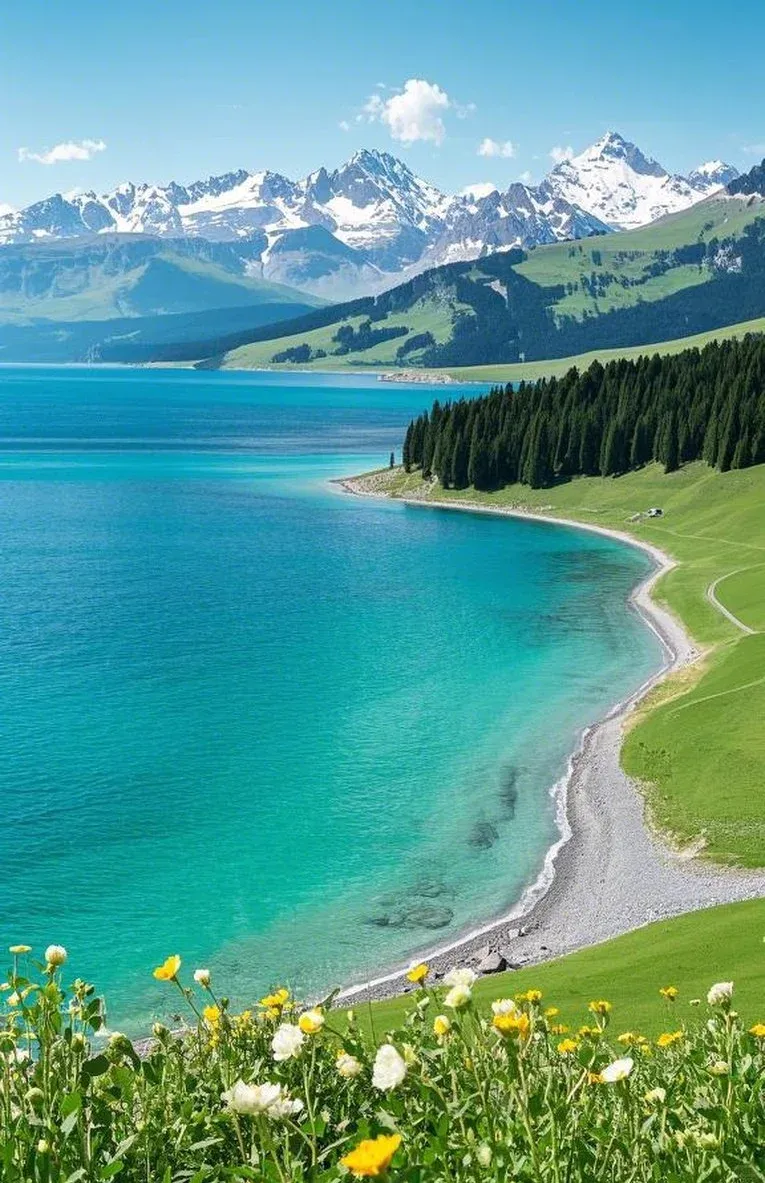
Off the train at Beitun and out to Wucaitan, the Rainbow Beach, where banded cliffs stand over the Irtysh. Then east into the Kanas scenic area, its glacial lake shifting from turquoise to deep blue through the day. Overnight inside the reserve.
04
Day 4
Kanas morning, Hemu afternoon
The lake at first light, then across to Hemu, a cluster of Tuva log cabins in a highland valley where the birch forests and the river bridges are the whole photograph. Afternoon free on the grassland.
05
Day 5
The Ahe Highway to Altay, and back aboard
Out of the mountains on the Ahe Highway, the new scenic road across the Altay, with a stop in Altay before the railhead. The longest land leg of the northern half, and the one the tour director builds the most stops into. Dinner and the night on the train.
Night aboard
06
Day 6
Sayram Lake and Yining
Sayram, the highest and largest alpine lake in the Tianshan at just over two thousand metres, called the last tear of the Atlantic because it catches the final moisture of the westerlies. Lakeside walking, then on to Yining and its Six-Star Street, where Kazakh, Uyghur and Russian threads meet.
07
Day 7
The Nalati grasslands
A full day in the air-grassland at around two thousand metres, the meadows rolling out under snow peaks with horses moving through them. The Ili valley at its most open.
08
Day 8
Bayanbulak, Swan Lake and the Nine Turns
The high grassland where the Kaidu River doubles back on itself at the Nine Bends, Eighteen Turns viewpoint, with the Swan Lake wetlands behind it. The most photographed afternoon of the journey, and an overnight at altitude before the crossing south.
09
Day 9
Over the Tianshan to Kuqa
South over the range on the Duku Highway's southern section, through the Tianshan Grand Canyon, and down into Kuqa, the ancient kingdom of Kucha. Dinner aboard as the train runs west toward Kashgar.
The Duku Highway is open to mainland, Hong Kong, Macao and Taiwan travel documents. The Bayanbulak section alone is not open to holders of foreign passports; where an itinerary includes that section, foreign-passport guests travel a substitute routing arranged by the operator. Full guide.
Night aboard
10
Day 10
The Karakoram road to Tashkurgan
Up onto the Pamir on the Karakoram Highway: White Sand Lake with its chalk-white dunes above turquoise water, then the Stone City and the Golden Grassland at Tashkurgan, with Pakistan, Afghanistan and Tajikistan all within reach of the horizon. Overnight at 3,100 metres.
Tashkurgan sits in a border-management area. The electronic border permit is arranged by the operator as part of the tour, and travellers cannot apply for it themselves. A clear passport scan is needed at booking.
11
Day 11
Karakul Lake and back to Kashgar
A Tajik family visit in the morning, then Karakul Lake under Muztagh Ata, the 7,500-metre dome that stands over the water. Back down the highway to Kashgar for the evening.
12
Day 12
Kashgar old town, then east by rail
Both zones of the old city on foot, the Id Kah Mosque, and the Gaotai mud-brick houses above the river. In the evening the train leaves for Turpan, and the night passes on the rails through the eastern desert.
Night aboard
13
Day 13
Turpan, and the loop closes
The karez wells that made agriculture possible below sea level, the Flaming Mountain, and Jiaohe, the ruined Tang city on its island of rock. Coach back to Urumqi for the farewell dinner, and the last night in a hotel.
14
Day 14
Departure
Airport transfer for your onward flight. Passengers extending in Xinjiang can be dropped at their own hotel instead.
The three Gold tiers, and the 2027 fares
All three tiers carry a private en-suite bathroom with separate wet and dry zones, and the same hotel standard on the ground. What changes is space and how many cabins share a carriage. Fares are per person, two sharing, and include meals, hotels, guiding, entrance fees, transfers and the onboard medical team. Official 2027 fares, checked against the operator's published sales plan:
Tier
Cabin
Per carriage
Spring
Summer
Autumn
Imperial Gold Diamond
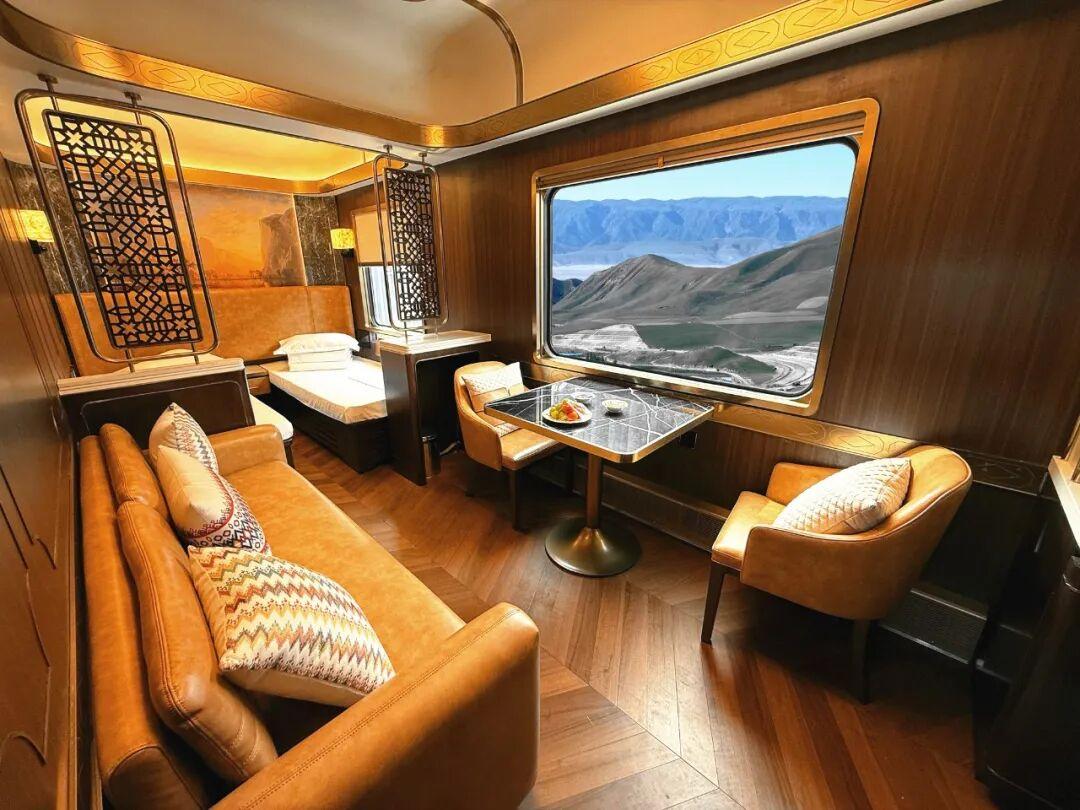
Deluxe twin cabin, about 8 m², beds convertible to a double
4 rooms, 8 guests
58,999
62,999
66,999
Supreme Gold Diamond
True suite, about 12 m², double bed plus a sofa
3 suites, 6 guests
65,999
68,999
72,999
Platinum Gold Diamond
The value tier: same en-suite standard, denser layout
5 cabins per carriage
37,888 to 38,888, by date
The Platinum tier runs its own carriage set and its own calendar: six of its fourteen-day sailings are already sold out for 2027, so the dates do not always match the flagship's. The eleven-day South Xinjiang edition runs at 46,999 in Supreme and 38,999 in Imperial. Fares and availability are confirmed in writing at booking.
2027 departures
Season
Departure dates, Urumqi to Urumqi
Spring
16 April · 7 May · 20 May
Summer
2 June · 16 June · 30 June · 14 July · 28 July · 11 August
Autumn
30 August · 13 September · 27 September
South Xinjiang, 11 days
15 October · 25 October
Dates come from the operator's published 2027 plan. The railway calendar behind them is confirmed after the New Year; we register a priority hold now and the definitive confirmation arrives in writing. See all 2027 departures.
Photo Gallery
What's Included
Included
✓Private en-suite cabin aboard the train, in your chosen tier
✓Five-star and best-available hotels on the land nights
✓All meals: breakfast, lunch and dinner through the journey
✓Welcome and farewell banquets
✓All listed excursions with an English-speaking guide
✓Ground transfers and all entrance fees
✓Onboard medical officer
✓Group travel accident insurance
Not Included
×Flights to and from Urumqi
×Chinese visa fees
×Personal travel insurance (strongly recommended)
×Single supplement where a cabin is occupied alone
×Personal expenses and optional activities
×Gratuities
Aboard the New Orient Express
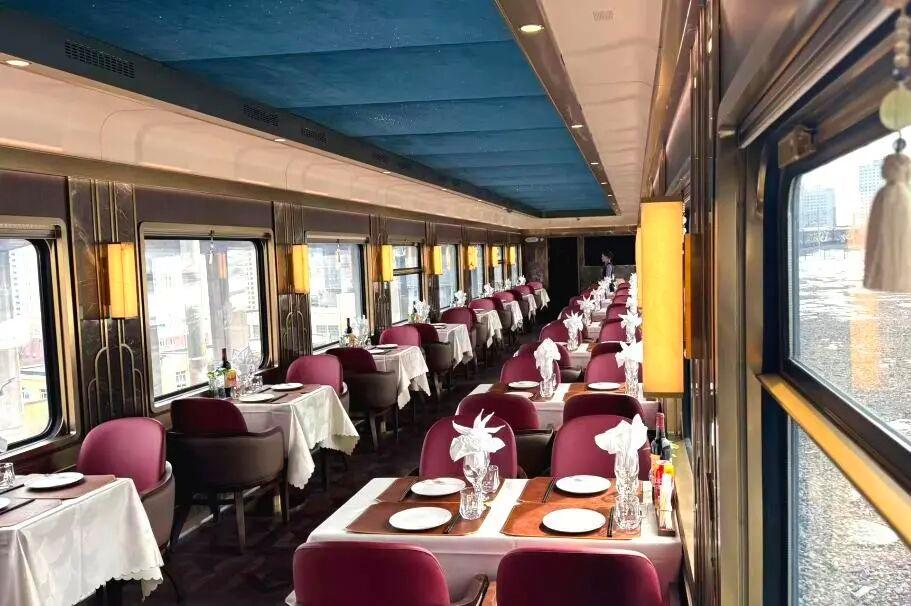
China's longest-running luxury tourist train, operated by China Railway Urumqi Group. Eighteen carriages, three Gold tiers, Xinjiang cooking, and twelve fourteen-day sailings in 2027.
First-time Xinjiang travellers who want the whole province in one pass
Photographers and nature enthusiasts
Cultural travellers drawn to Silk Road and Uyghur heritage
Travellers in reasonable health who prefer unpacking once into each stop
Consider If
You want a short, city-based trip rather than a loop of 3,000 km
You would rather not have road days between the rail legs
You are travelling with children under 12 (long days, few child-specific activities)
Questions About This Journey
Through us. The journey is operated by China Railway Urumqi Group; we curate it for English-speaking travellers and handle the booking, the paperwork and the on-trip support. In practice: you choose a departure and a tier, we place a priority hold and send a one-page summary with the fare and the cancellation ladder, a deposit of RMB 20,000 confirms the cabin, and the balance falls due 45 days before departure. Passport or Home Return Permit copies are needed at booking for the manifest, and for the Pamir days the border permit is arranged by the operator. See the booking guide for the full process.
Four nights on the summer and autumn sailings, five on the spring ones, out of thirteen nights in total. The rest are in hotels. The nights aboard are the long overnight runs, so the train covers the distance while you sleep and the daylight hours are spent ashore rather than on a day coach.
Imperial and Supreme share the flagship carriages and the same hotel standard; Supreme adds roughly four square metres, a sofa, and a truly private sitting area, with three suites to a carriage instead of four rooms. Imperial is the sensible choice for most couples. Platinum is the value configuration of the same generation, with the same en-suite standard at a distinctly lower fare and a denser cabin layout.
Most of the circuit stays below 2,000 metres: Urumqi is at 800, Kashgar at 1,300, Kanas at 1,400. Sayram Lake is just over 2,000. The highest overnight is Tashkurgan at about 3,100 metres, and the highest point reached is the Tianshan crossing at roughly 3,400, a daytime transit rather than a night at altitude.
Layers. Desert daytime can reach 38 degrees C in July, while mountain evenings drop to 10. Lightweight long sleeves for sun, a warm jacket for the evenings, comfortable walking shoes, a sun hat, SPF 50+ sunscreen, and a camera with spare cards. See the packing guide for the full list.
Your journey starts here. Our journey designers respond within 24 hours with a personalised proposal.